
Careers in cyber security: roles, skills and how to start
What cyber security professionals actually do, the main job roles, the skills that matter, and what you can start learning while still in school.
26 Oct 2026 · 3 min read
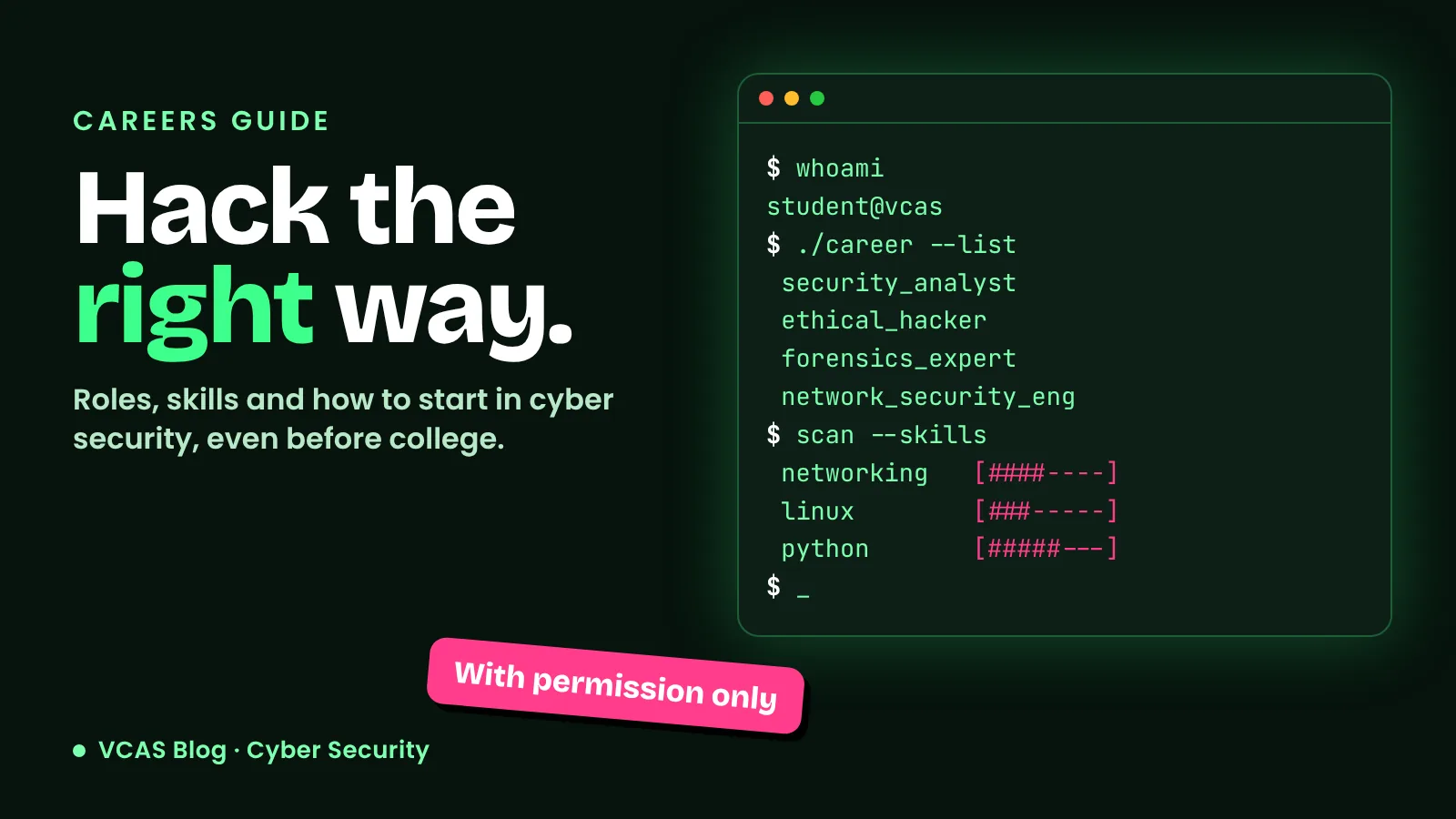
Cyber security work splits into defending systems, testing them, investigating attacks and managing risk. Start with networking basics, Linux and a scripting language, then build practical experience through labs and competitions.
When people hear "cyber security", they often picture a hacker in a dark room. Real cyber security work looks quite different. Most of it happens in ordinary offices, in teams, and much of it is careful, patient checking. It is also one of the fields where demand keeps rising, because almost every organisation now depends on computers and data.
Here is a plain guide to what the work involves and how a student can begin.
What cyber security people actually do
The work falls into four broad areas.
- Defending: watching networks and systems for warning signs and responding when something goes wrong.
- Testing: attacking a system with permission to find its weaknesses before criminals do.
- Investigating: working out what happened after an attack, what was taken and how.
- Managing risk: writing policies, training staff and making sure an organisation follows the law on data.
Common roles
Security analyst. Often the first job for graduates. Analysts watch alerts from monitoring tools, decide which ones are real and raise the alarm. Many work in a Security Operations Centre, sometimes in shifts.
Ethical hacker or penetration tester. Tests websites, apps and networks by trying to break in, then writes a report on what to fix. Good testers are curious, patient and clear writers.
Network security engineer. Designs and maintains firewalls, VPNs and secure networks for a company.
Digital forensics expert. Examines computers and phones after an incident, collecting evidence carefully enough for it to be used by police or courts.
Information security officer. A senior role that sets security rules for a whole organisation. Most people reach it after years of hands-on experience.
The skills that matter most
Technical skills come first, but they are not the only ones.
- Networking. How data moves, what IP addresses and ports are, and how the internet is built. Almost every security topic depends on this.
- Operating systems, especially Linux. Many security tools run on Linux, and many servers use it.
- Programming or scripting. Python is the most common starting point. You do not need to be an expert developer, but you must be able to read and write simple scripts.
- Problem solving. Security work is a long series of small puzzles.
- Ethics and discretion. You will see private data and powerful tools. Employers need to trust you completely.
- Clear writing. A finding that nobody understands never gets fixed.
How to start while you are still in school
You do not have to wait for college.
- Learn how networks work through free online courses or videos.
- Install a Linux distribution on an old laptop or in a virtual machine and practise basic commands.
- Write small programs in Python.
- Try beginner "Capture the Flag" challenges, which are legal puzzles designed to teach security skills.
- Keep a notebook of what you learn. It becomes useful evidence of interest later.
One firm rule: never test a system you do not own or have written permission to test. Unauthorised access is a crime in India under the IT Act, even if you meant no harm.
Degrees and certifications
A degree gives you the structured foundation: networking, operating systems, cryptography, programming and law. Many professionals later add industry certifications for specific skills. Ask your teachers which ones fit your goals before paying for any course.
Learning cyber security at Vedavyasa
The B.Sc Cyber Security (Honours) programme at VCAS covers network security, ethical hacking, cryptography and digital forensics, under the University of Calicut syllabus. Students also join the college's Cyber Security Club and tech activities, where they practise outside the classroom.